More From Green Room


Before I was an investor, I spent almost a decade in manufacturing at Tesla. What stayed with me most was that building the machines of the factory was only part of the challenge. Making them work reliably in a dynamic, real-world environment was something else entirely. That experience shaped how I think about robotics today. The opportunity in physical AI isn’t simply better hardware. It’s giving machines the intelligence to adapt, learn and perform a much broader range of tasks.
Robotics has been a difficult fit for venture capital for a long time. Hardware is expensive, manufacturing is capital intensive, and deployment into a real operating environment is complicated. Every new capability can mean buying more equipment, integrating more vendors and spending more capital.
Even at Tesla, one of the most advanced manufacturing environments in the world, a lot of physical work still required people. Technicians handled final assembly and other tasks that were difficult to automate. Most manufacturing facilities are nowhere close to Tesla, which is the point. The efficiency across the rest of the industry is immense.
What is changing now is not the cost of building physical infrastructure. It is what intelligence can do once it is deployed into that infrastructure. Traditional industries have always been CreativeCo's focus, which is why this is a category we have spent the past year studying closely.
Robotics has been part of manufacturing for decades. Physical AI is different. It is AI embedded into machines and systems that perceive, reason and act in the physical world.
Most robots installed today have little or no AI in them, and some of the most interesting applications of physical AI do not involve a robot at all. AI is going into robotic arms, cameras, sensors, warehouses, autonomous vehicles and the list keeps growing.
The models have gotten much better at interpreting what is happening in the physical world. Cameras and sensors have gotten cheaper. Together, those two developments make it possible to capture information that was previously very difficult to collect and use.
That changes where value gets created in robotics.
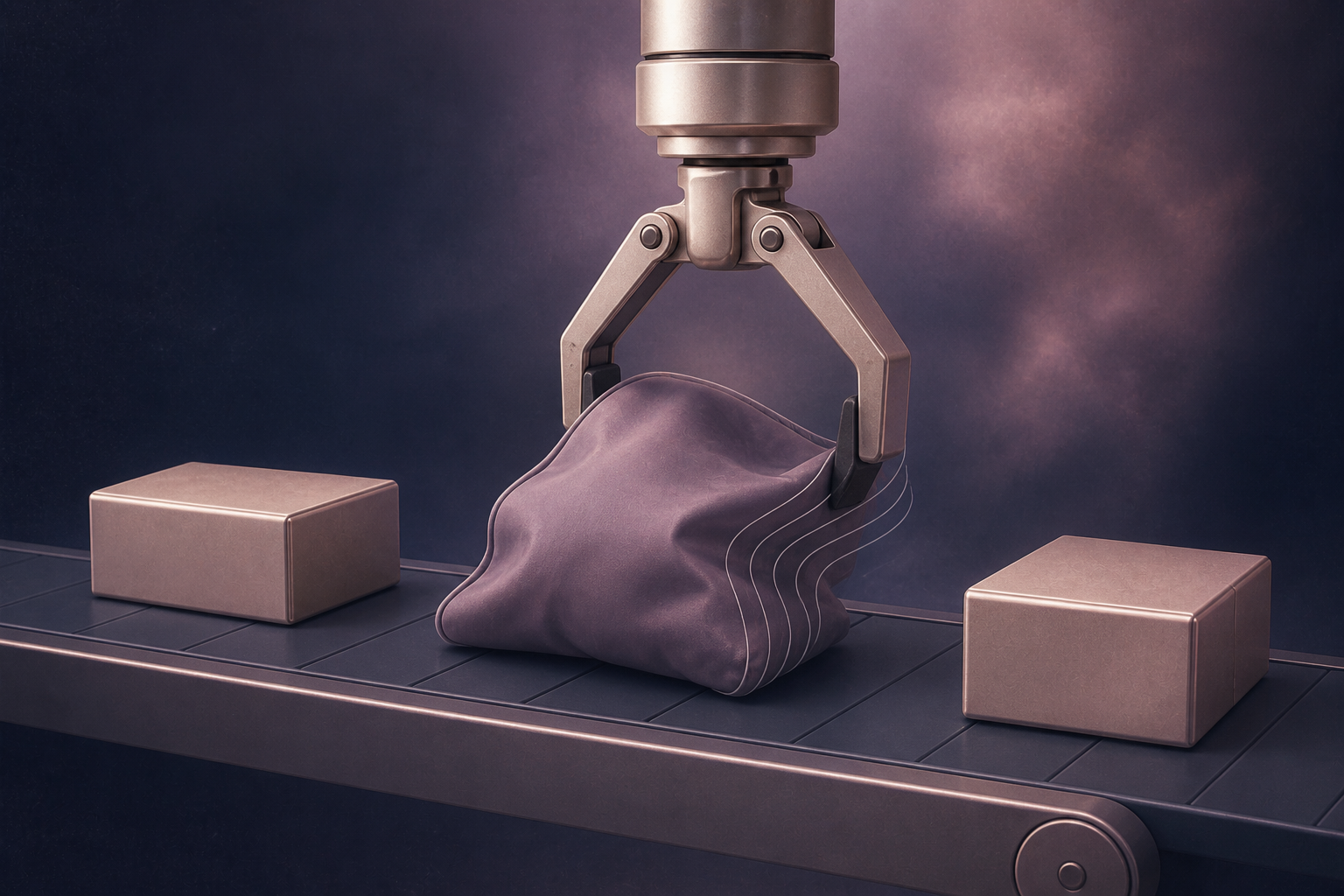
The KUKA arms we installed at Tesla were beautiful machines. They handle body assembly, they feed metal sheets into large stamping machines and other specialized tasks, and they are very good at the heavy lifting. Anyone with the budget could buy the same ones. The machine was never the differentiator. The harder thing to replicate was the knowledge of how the operation actually worked.
Manufacturing and robotics still consume enormous amounts of CAPEX, and that is not going away. But the operations themselves hold two things that are much harder to buy: the knowledge of how the work actually gets done and the data generated from doing it every day.
Companies have been trying to productize that knowledge for years. Every system ever built required someone to stop what they were doing and type it in. Now cameras and sensors can observe the work directly, and models are good enough to make sense of what they see.
The knowledge can be observed instead of entered.
That opens up the opportunity. A company can instrument lines, fleets and other physical assets that already exist, learn from what happens across them, and own the intelligence layer sitting on top of equipment the customer already has.
There is another reason this category is getting interesting. The opportunity is not tied to a traditional software budget. It sits in labor and cost of goods sold.
Consider a factory that spends $100 million a year on people and machines. Improving productivity, inspection, downtime or automation even incrementally creates significant economic value against a line item that size.
The need for that automation is becoming more acute. Deloitte estimates U.S. manufacturing could require as many as 3.8 million new workers by 2033, with roughly 1.9 million of those roles going unfilled. In one survey, 81% of manufacturers reported an inability to maintain production levels to satisfy demand because of unfilled positions.
Aging populations and below-replacement birth rates only add to that pressure, making automation less optional over time. The same shortage shows up in field services, inspection and municipal work, anywhere somebody still has to physically go look at something or do something.
Capital is already moving toward it. Robotics and physical AI venture investment reached an all-time high in 2025, and companies in the category raised $16.3 billion across 492 deals in the first quarter of 2026.
.png)
Companies like Physical Intelligence and Skild AI are collecting increasing amounts of data to train models for the physical world. Collecting and processing data from the physical last mile has historically been too difficult to do at scale. As models improve and more data becomes available, that constraint loosens.
The advantage is not access to a better model or a more advanced machine. It is what a company learns from deploying into a specific operating environment over time. As foundation models advance and deploy into the physical word, then the training data improves them. This loop compounds fastest where it runs inside a vertical industry, which is where we expect winners to emerge.
This looks a lot like what we have seen happen in vertical AI software. The underlying technology gets better and more accessible, while the durable value comes from applying it deeply to a specific workflow and customer problem.
At CreativeCo, we have invested across government and defense, construction and field services, manufacturing, financial services and healthcare. These are industries where a tremendous amount of knowledge still sits inside the companies themselves and nobody has captured it yet.
We are early, and we are still learning the economics of Physical AI in general. There will be companies in this category that run into the same problems that made robotics difficult for venture investors in the first place.
The businesses that interest us are the ones that can show the economics really are different. Can they deploy without requiring enormous amounts of capital? Does operating in the physical world create a proprietary data or knowledge advantage over time? Can they turn that advantage into business fundamentals that scale?
Those questions are more useful to us than trying to predict exactly how large the physical AI market will become. There are plenty of forecasts, and they vary widely. What is clear is that the technology is improving quickly, labor constraints are real, and intelligence can now reach parts of the physical economy that were previously difficult to automate.

.svg)


%20(1).png)